
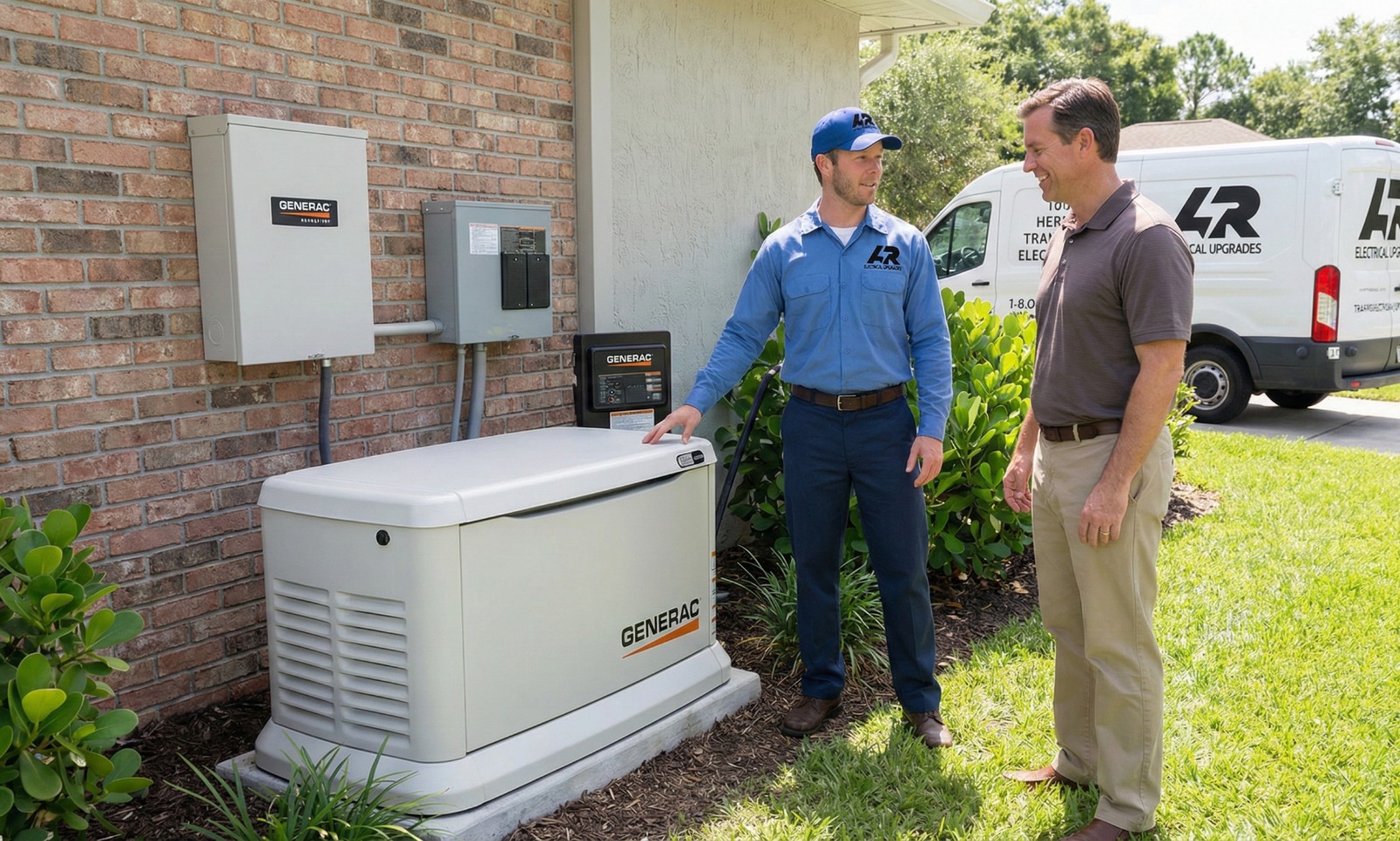
Backup generator installation for South Florida homes

Every Backup Generator installation starts with a home electrical inspection to confirm safety, capacity, and compatibility.

Backup Generator client review

When a generator inspection is the right step

A backup generator inspection is recommended if any of the following apply.

Electrical Panel Inspection review by AR electrical technician

Frequent power outages

Repeated utility interruptions can justify standby generator planning, including load calculations, transfer switch sizing, and fuel source evaluation.

Home medical gear or essential appliances

Critical equipment such as medical devices, refrigeration, or sump pumps requires verified backup capacity and properly rated emergency circuits.

Uncertainty electrical load requirements

A professional load assessment determines generator kilowatt sizing, service amperage compatibility, and automatic transfer switch configuration.

Hurricane preparedness planning

Storm-prone regions require code-compliant standby systems, proper anchoring, and surge protection to ensure safe operation during severe weather events.

Electrical Panel Inspection review by AR electrical technician

Frequent power outages

Repeated utility interruptions can justify standby generator planning, including load calculations, transfer switch sizing, and fuel source evaluation.

Home medical gear or essential appliances

Critical equipment such as medical devices, refrigeration, or sump pumps requires verified backup capacity and properly rated emergency circuits.

Uncertainty electrical load requirements

A professional load assessment determines backup generator kilowatt sizing, service amperage compatibility, and automatic transfer switch configuration.

Hurricane preparedness planning

Storm-prone regions require code-compliant standby systems, proper anchoring, and surge protection to ensure safe operation during severe weather events.

What installing a backup generator involves

A backup generator supplies power during outages through a transfer switch connected to your electrical panel.Ā 

Backup Generator installation

Electrical load calculation and generator sizing

We calculate your home’s running wattage, starting loads, and priority circuits to determine the correct generator capacity in kilowatts. Proper sizing prevents overload, voltage fluctuation, and wasted fuel.

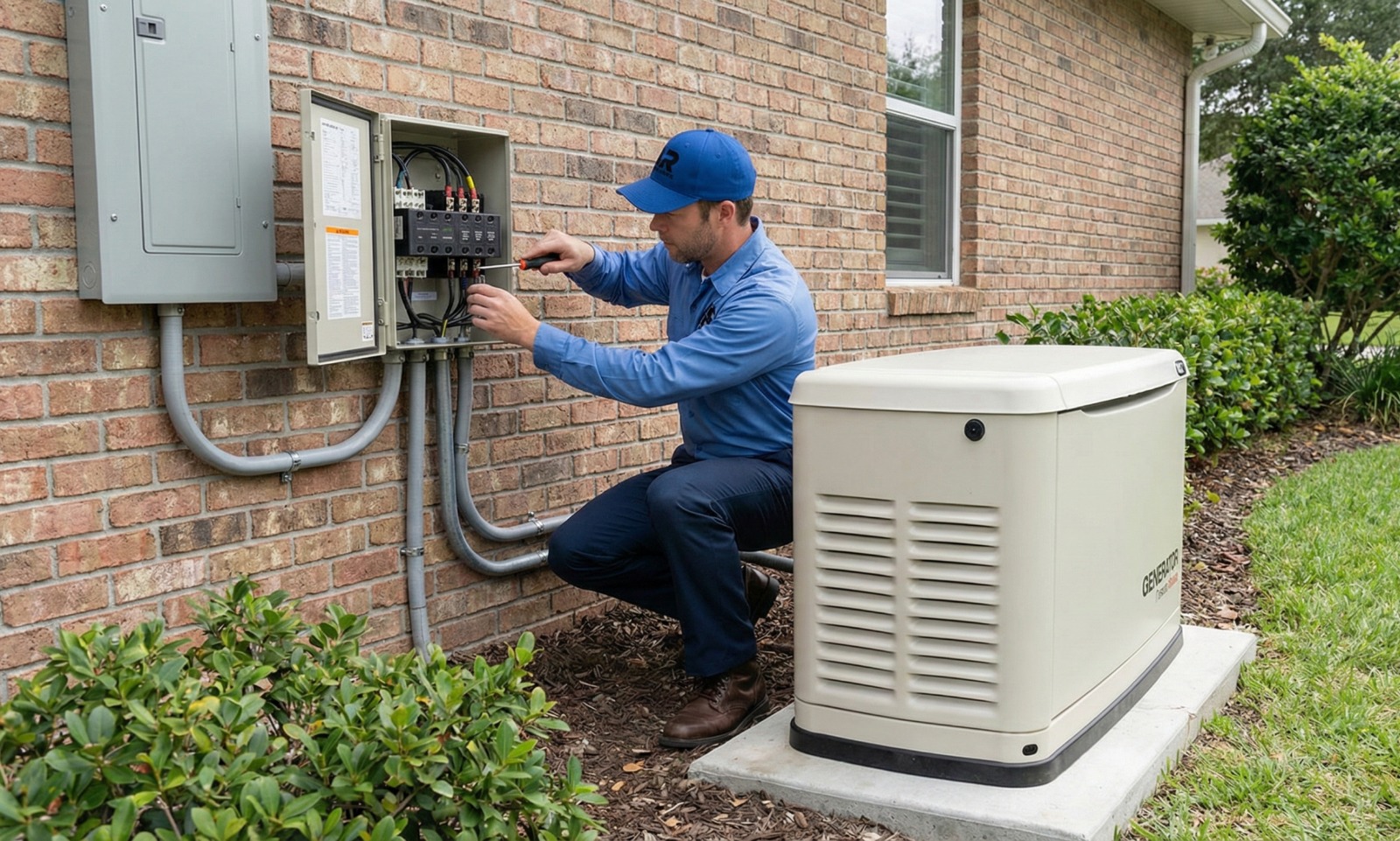
Transfer switch and panel integration

A manual or automatic transfer switch is installed to isolate your home from the utility grid during outages. This protects line workers and ensures seamless, code-compliant power transfer.

Fuel source and placement planning

Standby generators require approved fuel connections such as natural gas or propane. Placement must meet clearance requirements for ventilation, noise control, and manufacturer specifications.

Permits, grounding, and final inspection

Generator installations require electrical permits, proper grounding and bonding, and municipal inspection before activation. Final testing confirms safe startup and reliable operation when utility power fails.

Backup generator installation process

We arrive on time, work efficiently, and leave your home clean.

Day one - Initial assessment begins

Our inspector examines your panel’s age, condition, and current load. We check for code violations, safety hazards, and capacity issues. This takes about 20 minutes.

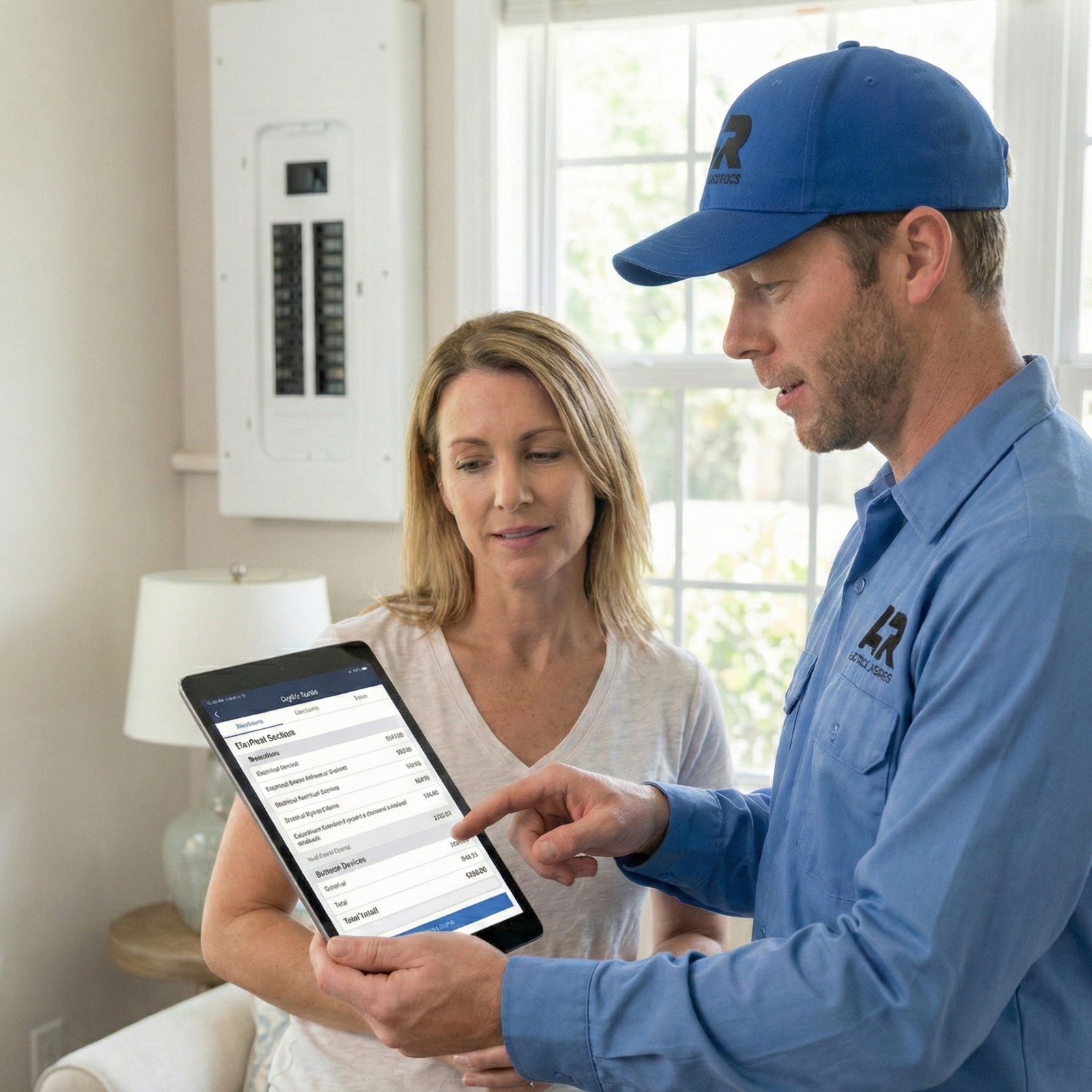
Day two - Quote based on facts

We provide a detailed estimate for any work needed. No surprises. No hidden fees. Just honest pricing based on your home’s actual requirements.

Day three - Installation and permits

Once approved, we handle permits, scheduling, and the upgrade itself. We coordinate with local authorities and ensure everything passes final inspection.

Day one - Initial assessment begins

Our inspector examines your panel’s age, condition, and current load. We check for code violations, safety hazards, and capacity issues. This takes about 20 minutes.

Day two - Quote based on facts

We provide a detailed estimate for any work needed. No surprises. No hidden fees. Just honest pricing based on your home’s actual requirements.
Ā 

Day three - Installation and permits

Once approved, we handle permits, scheduling, and the upgrade itself. We coordinate with local authorities and ensure everything passes final inspection.

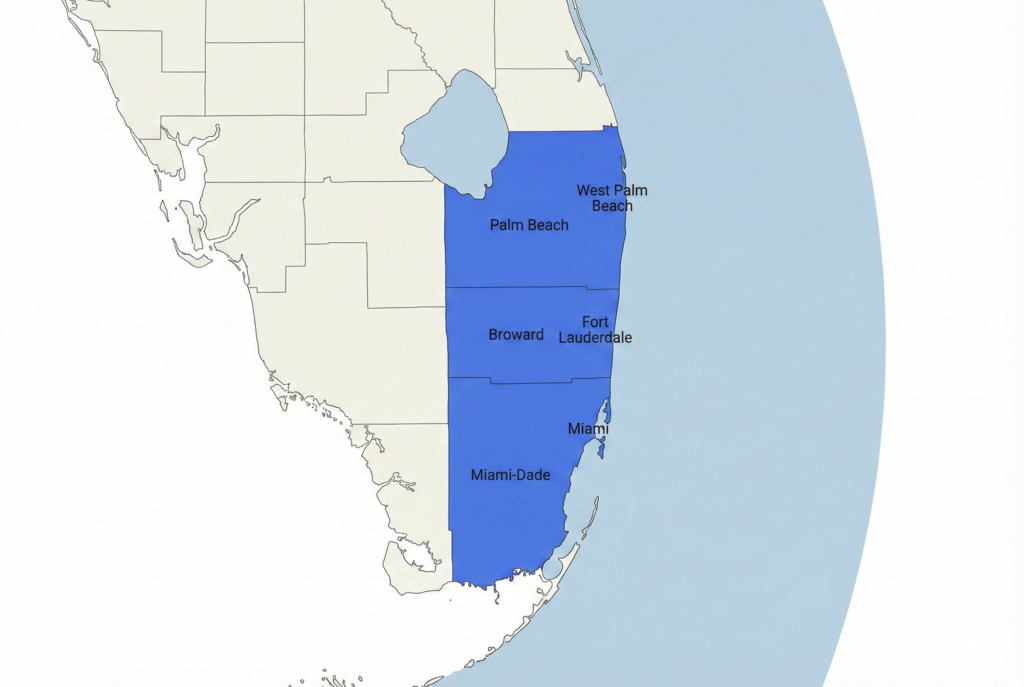
Where we work

Our services are limited to residential properties within our South Florida service area.​

Broward County

Fort Lauderdale , Pembroke Pines,Ā Hollywood,Ā Coral Springs,Ā Plantation,Ā Sunrise,Ā Weston,Ā Davie,Ā Deerfield Beach,Ā Pompano Beach,Ā Miramar,Ā Tamarac,Ā Margate,Ā Coconut Creek,Ā Dania Beach

Miami-Dade County

Miami, Hialeah, Miami Gardens, Miami Beach, Coral Gables, Doral, Homestead, North Miami, North Miami Beach, Aventura, South Miami, West Miami.

Palm Beach County

West Palm Beach, Boca Raton, Delray Beach, Boynton Beach, Palm Beach Gardens, Wellington, Jupiter.

AR Electrical service zone cover map

Where we work

Our services are limited to residential properties within our South Florida service area.​

Broward County

Fort Lauderdale , Pembroke Pines,Ā Hollywood,Ā Coral Springs,Ā Plantation,Ā Sunrise,Ā Weston,Ā Davie,Ā Deerfield Beach,Ā Pompano Beach,Ā Miramar,Ā Tamarac,Ā Margate,Ā Coconut Creek,Ā Dania Beach

Miami-Dade County

Miami, Hialeah, Miami Gardens, Miami Beach, Coral Gables, Doral, Homestead, North Miami, North Miami Beach, Aventura, South Miami, West Miami.

Palm Beach County

West Palm Beach, Boca Raton, Delray Beach, Boynton Beach, Palm Beach Gardens, Wellington, Jupiter.

AR Electrical service zone cover map

FAQ

Answers to what homeowners ask us most often.

What is a backup generator and how does it work?

A backup generator is a system that automatically or manually supplies electricity to your home during a power outage.

When utility power goes out, the backup generator:

  • Detects the outage

  • Activates through a transfer switch

  • Supplies electricity to selected circuits or the entire home

It keeps essential systems like refrigeration, lighting, air conditioning, and medical equipment running during emergencies.

Do I need a backup generator for my home?

You may benefit from a backup generator if:

  • Your area experiences frequent outages

  • You rely on medical equipment

  • You work from home

  • You want to protect refrigerated food

  • You want to maintain comfort during storms

A backup generator provides reliability and peace of mind during unexpected power loss.

What size generator do I need?

The right backup generator size depends on:

  • The size of your home

  • The number of appliances you want to power

  • HVAC systems

  • Water heaters, well pumps, or pool equipment

During the inspection, a load calculation determines whether you need a partial-home or whole-home backup generator.

Do I need an electrical panel inspection before installing a generator?

Yes.

Before installing a backup generator, an electrician must:

  • Perform a load calculation

  • Evaluate your electrical panel capacity

  • Determine transfer switch requirements

  • Identify any necessary panel upgrades

The inspection ensures your system can safely integrate the backup generator.

Ā 

What is a transfer switch and why is it required?

A transfer switch safely connects your backup generator to your electrical panel.

It:

  • Prevents backfeeding into utility lines

  • Protects utility workers

  • Ensures safe power switching between utility and generator power

Transfer switches are required by code for permanent backup generator installations.

Will I need to upgrade my electrical panel to install a backup generator?

It depends on your current system.

You may need a panel upgrade if:

  • Your panel is outdated or undersized

  • There is limited breaker space

  • The panel does not meet current code requirements

The inspection determines whether your existing electrical panel can support the backup generator safely.

How long does backup generator installation take?

Most backup generator installations take one to three days, depending on:

  • Generator size

  • Site preparation

  • Electrical modifications

  • Permit and inspection requirements

Your electrician will outline the timeline before the project begins.

Do I need permits to install a backup generator?

Yes.

Backup generator installations typically require:

  • Electrical permits

  • Possible gas permits

  • Local authority inspections

Your contractor handles the permitting and coordination process to ensure full code compliance.

Is a generator noisy?

Modern backup generator systems are designed to operate at moderate sound levels, similar to central air conditioning units.

Installation location and proper setup help minimize noise impact.

Can a backup generator power my entire home?

Yes, if properly sized.

A whole-home backup generator can power:

  • HVAC systems

  • Refrigeration

  • Lighting

  • Kitchen appliances

  • Essential outlets

If you prefer a more cost-efficient option, a partial-home system can power only selected circuits.

How much does a generator installation cost?

The cost depends on:

  • Generator size

  • Electrical panel modifications

  • Transfer switch installation

  • Gas line requirements

  • Permit and inspection fees

After the inspection, you receive a detailed estimate outlining the recommended solution

Is a backup generator a good investment?

For many homeowners, yes.

A backup generator:

  • Protects your home during outages

  • Prevents food spoilage

  • Maintains comfort and safety

  • Adds long-term reliability

It is often considered a valuable infrastructure upgrade, especially in areas prone to storms and grid instability.

Schedule Your Inspection or Service Request

Fast, licensed, and code-compliant electrical solutions.Ā 

Contact Form Demo

Schedule Your Inspection or Service Request

Fast, licensed, and code-compliant electrical solutions.Ā 

Contact Form Demo
Contact Form Demo
Scroll to Top